
Where They Buried the Survivors
One of the many things science fiction and Westerns have in common is the dream of an empty world. Cormac McCarthy’s 1992 novel All the Pretty Horses is a stunning tale of open grasslands, lava fields, swamps, river fords, overhanging rock ledges (convenient for camping), and mountains in the distance. Its heroes, two boys who ride from Texas to Mexico in search of adventure, go for whole days without seeing another soul. The world of McCarthy’s new novel, The Road, is wide-open, too, but it’s not the fresh new land before people came. Now it’s the blasted wreck that will be left after the people have gone.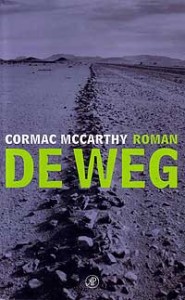
Just as All the Pretty Horses was a Western taken to extremes, The Road borrows from science fiction the struggle to survive after the apocalypse. It’s a plot as well known from movies (Mad Max) as from books (The Handmaid’s Tale); often it’s a way of rearranging society to question our own arrangements. But for McCarthy, it’s a way of taking life down to its bones. He strips away social bonds, yielding a bare stage on which to dramatize physical sensations (thirst and the slaking of thirst, cold and a fire, hunger and the taste of peaches) and elemental emotions. McCarthy is a sensual writer seeking extremes of sensation. He’s a theatrical, even bombastic writer, and he’s made a barren heath for King Lear to rave on. He favors adventure stories, and he’s written a millennial On The Road. He broods on fate, and he’s given man a reason to shake his fist against God.
The travelers in The Road are a nameless father and son, going south in hopes of living through the winter. The war that destroyed the world, or at least their part of it, the American South, has been going on for years; the boy, who is about eight, was born a few days after it began. We do not know how they have survived for so long, though we learn that the boy’s mother has committed suicide rather than live on. On foot, pushing a shopping cart, they follow a carless highway through forests and over burned stretches, sleeping in abandoned houses or under those handy overhanging rocks, watching out for the thieves and cannibals who are the only humans left.
They’re still alive, but to what purpose? The violence is so Biblical in scale (and in origin—McCarthy hints that the war was a sectarian one) that humans seem capable of nothing else. We see no restoration of social bonds, no little community banding together to have children, grow food, and regenerate the earth. The only groups the travelers meet are marauding companies of cannibals or, horrifyingly, prisoners about to be eaten. The only family they encounter commit a similar crime.
“We’re not survivors,” the mother says before she departs. “We’re the walking dead in a horror film.” Bodies lie everywhere, scorched or mummified, “shriveled and drawn like latterday bogfolk, their faces of boiled sheeting, the yellowed palings of their teeth.” The war, the man muses, took all social questions with it. “The frailty of everything revealed at last. Old and troubling issues resolved into nothingness and night.” The most sensible thing for the living to do, McCarthy suggests at various points, would be to die. The father considers the two bullets, then one bullet, left in his gun.
The man keeps going for his son’s sake, but he’s a selfish father, not a heroic one: he makes his son endure so that he himself will have an excuse for hope. McCarthy, who is 73, also has a small son; The Road is a Doomsday Book of paternal fears, but it may specifically be about an old man’s foreboding of death, his late, anxious joy in a young life, and his sorrow at his child’s going on alone.
Are we the good guys? the son keeps wanting to know. Yes, the father answers, but this is more reassurance than truth. The father rejects cannibalism, but to his son’s distress he refuses to risk their lives to save others. It is the son, not the father, who is still capable of horror at the dead or compassion for the living. The father has fed the son optimism, keeping none for himself.
Whatever you think of McCarthy’s view of human nature, The Road is a spectacular example of his storytelling skill. He is a remarkable stylist, a writer of long, rolling sentences; he’s often compared to Faulkner, Melville, Conrad or, in his more exaggerated moments, Thomas Pynchon. If you like realistic novels and straightforward prose, you can skip McCarthy and no one will hold it against you. (That said, the writing in The Road is relatively economical. Here at the end, even words seem in short supply.) But if you’re capable of suspending disbelief and going with him, he can draw you willingly into subjects you never thought you enjoyed: horses, whorehouses, knife fights in Mexican jails, the war of all against all.
Another writer McCarthy resembles, oddly enough, is Tolkien. Like Tolkien, he can evoke fictional worlds so intense, compelling, and fully imagined that you don’t read a book so much as enter it. (It’s probably for this urgency and sureness that McCarthy has such a devoted following, almost a cult status among his fans.) Like Tolkien, he takes us on quests, leaving the women behind. And the two writers share a terrific feel for the rhythm of a story. The Road speeds up (they encounter bandits and make a narrow escape), slows down (they plod along, food gone, starving), then flows suddenly into a calm, hidden pool (they find a stash of food and a place to rest, waking up to the startling normalcy of coffee, ham, and biscuits for breakfast). Often the moments of rest come in dreams or memories: a bleak depiction of what is will be followed by an idyllic glimpse of what was: brothers and sisters doing homework by a fire, or “the flash of trout deep in a pool…Reflecting back the sun deep in the darkness.”
The Road is a strangely beautiful book, despite or maybe because of its bleakness, which forces McCarthy to confess a love for the mundane: here pleasure is not in the mad trip across the wilderness but in the memory of home and warmth. We aren’t allowed to forget at what price warmth came. Coming to an antebellum mansion we’re told: “He held the boy’s hand and they crossed the porch. Chattel slaves had once trod those boards carrying food and drink on silver trays.” He is telling us how fragile goodness is, and, paradoxically, how much of it we still have to lose.
On the road, father and son meet an old man who calls himself Ely; he represents the prophet Elijah, who is forecast to return on Judgment Day. Ely tells the father, “Things will be better when everybody’s gone.”
Better for who?
Everybody….We’ll all breathe easier…When we’re all gone at last then there’ll be nobody here but death and his days will be numbered too. He’ll be out in the road there with nothing to do and nobody to do it to. He’ll say: Where did everybody go? And that’s how it will be. What’s wrong with that?
When the father suggests that his son might be a god, a young Prometheus carrying the fire of human life, the old man tells him it wouldn’t matter if he was: “Where men cant live gods fare no better. You’ll see.”
Yet McCarthy can’t bring himself to reach the end of the road in darkness. “Goodness” will save them, the man tells his son, his young Prometheus; it has before and it will again. We fear it’s another lie, to give his son hope; but at the same time it’s all the hope McCarthy has to give us.
Trouw, February 25, 2007. Cormac McCarthy, The Road (New York: Knopf, 2006); De Weg (Amsterdam: Arbeiderspers, 2007).