Archive

Essays

Clarissa Dalloway as flâneur: “My darling never be out late in the afternoon alone.”

There’s a pleasure in any place that comes purely from knowing it well. In the country, the feeling is often a private one: that tree, that field, that view seems to belong to you alone. In the city the same sentiment has a competitive, even arrogant edge. To claim a city’s heart—especially if you’re a writer—you have to insist that no one sees it more clearly or takes more joy in it than you.
Trouw Woolf Dalloway cover That’s why literature is so full of solitary walkers, sauntering anonymously through city crowds, observing the people’s faces, imagining their dreams. For Flaubert, Rilke, Baudelaire, Proust, Joyce, Nescio, this lonely city-dweller not only serves as the writer’s eye, he also serves to mark his urban claim. In literature, this character is known as the flâneur—the idler, the loafer, the connoisseur of street life. Like the writer, the flâneur is full of himself; he prides himself on knowing his way around while he rubs your nose in how happy he is, on a rainy morning in the Dapperstraat.
One of literature’s most arrogant and joyful flâneurs, the most determined of city-dwellers, is Clarissa Dalloway. In Virginia Woolf’s 1925 novel “Mrs. Dalloway” (recently reissued in an excellent new translation from Boukje Verheij), this female walker claims the city as the natural territory of the middle-aged woman. To read it now is to be impressed, not only by Woolf’s matchless style, but by how familiar Mrs. Dalloway seems: a confident woman planning a party to advance her husband’s career, going out to buy flowers, greeting old friends.
But it’s also to be aware of how different the city of 1925—dirty, lively, innocent—is from the city now. In the contemporary metropolis, where virtual encounters are as important as physical ones, what use do we still have for the flâneur? Does literature still have anything to tell us about the public life of cities?

“Such fools we are,” thinks Clarissa, crossing Victoria Street in London on a beautiful summer morning.

For Heaven only knows why one loves it so, how one sees it so, making it up, building it round one, tumbling it, creating it every moment afresh. […] In people’s eyes, in the swing, tramp and trudge; in the bellow and the uproar; the carriages, motor cars, omnibuses, vans, sandwich men shuffling and swinging; brass bands; barrel organs; in the triumph and the jingle and the strange high singing of some aeroplane overhead was what she loved; life; London; this moment of June.

“Mrs. Dalloway” begins, like Woody Allen’s film “Manhattan,” with a song of praise to the city’s chaotic inspiration. Woolf follows Clarissa from her elegant house in Westminster, through crowds and parks, into unexpected encounters and moments of revelation, tumbling, building, and inventing her city as she goes. As the characters—Clarissa, her old friend Peter Welsh, the war veteran Septimus Warren Smith—cross and recross each other’s paths, the novel becomes a map, a pattern of movements and associations, catching your eye, leaving you free to pursue them or not. Enter the book and you enter a crowd of people thinking, looking, taking turns telling the story.
Taking place over the course of one long midsummer day, “Mrs. Dalloway” is a portrait of a 51-year-old woman, an exploration of the nature of time, a critique of the pretentions of authority, a nostalgic look at friendship. We catch glimpses of a mother-daughter relationship, a man going mad, a lesbian romance.
And we see the city streets as the modernist writers saw them, as a place of new freedom. In the 1920s, a generation appalled by the slaughter of the First World War came to the city to get the past behind it. Cars and planes and short skirts and votes for women seemed to be rushing the world forward into a brighter, more rational future: the city as emancipation machine. In the dynamic, motorized London of the 1920s, where omnibuses storm like pirate ships up the avenues, a limousine with blind windows blocks traffic, and an airplane spells out an advertising message in the sky, nothing is what you think and anything could change.
When she began writing “Mrs. Dalloway,” Woolf was living in the suburbs, not by her own choice. She had had a nervous breakdown, and her doctors had warned her to avoid excitement. She wrote in her diary of her longing for London, where she could “go and hear a tune, or have a look at a picture, or find out something in the British Museum, or go adventuring among human beings.” When Woolf finished the novel, she had just defied medical advice by moving back to London. “Mrs. Dalloway” is full of an intellectual woman’s delight in the wealth of ideas generated by the city, the like minds, the new opportunities.
A woman walking in the city was a new thing, as Woolf was very aware. When the critic James Wood writes about the flâneur in “How Fiction Works,” his example of a writer who doesn’t observe the city is Jane Austen: “Her heroines never idly walk along, just thinking and looking.” Of course not: they couldn’t. In Austen’s day, to walk alone down a city street was enough to destroy a woman’s reputation, or worse. Even Woolf, in her twenties, was warned by an elderly aunt: “My darling never be out late in the afternoon alone.” Woolf understood that in writing a female flâneur, she was turning convention on its head.
Sometimes, though, the city for her is a place to be neither male nor female. In a 1930 essay on walking in London, “Street Haunting,” Woolf wrote that when we go outside we leave appearances behind. “The shell-like covering which our souls have excreted to house themselves, to make for themselves a shape distinct from others, is broken, and there is left of all these wrinkles and roughnesses a central oyster of perceptiveness, an enormous eye.” Woolf is famous for demanding a “Room of One’s Own” for women to write in. But Woolf doesn’t want to be in that room all the time. She likes the moments, as in that essay, when she goes out to buy a pencil and can be anonymous for half an hour.

A century later, the city has changed. Outside of a few UNESCO-listed, European open-air museums masquerading as urban centers, where does anyone still walk? Who admits to wasting hours thinking? The flâneur was always an outsider, but instead of being ahead of her time, now she’s trying to turn back the clock. Why isn’t she climbing the corporate ladder, taking courses in time management, squeezing minutes like blood from each day’s stone?
Who still looks at the world and not at a screen? Ali Smith’s short story “Being Quick,” from the recent collection “Naar de stad” (new short stories about city life, edited by Sanneke van Hassel and Annelies Verbeke), begins with a narrator who is and isn’t on her own: “I was on my way across King’s Cross station concourse dodging the crowds and talking to you on my mobile…” Anonymous in the city? Hardly. If Woolf went out to buy a pencil now, she’d probably make two phone calls and check her messages three times on the way.
If we were alone with our thoughts, we’d probably be nervous wrecks. The sketches by Lydia Davis in “Naar de stad” suggest that the modern, Western city is less emancipation machine than anxiety factory, a place that daunts its residents with so many possibilities and distractions that they have to take antidepressants to get by. And it only gets worse, according to the stories in “Naar de stad” that are set in Third World cities, or in the urban underground of illegality.
In a society individualized in ways Woolf couldn’t have imagined, Mrs. Dalloway’s freedom has been transformed into an endless series of choices like worms eating at our roots, cutting us away from our sense of place. The modern literary flâneur is more than anonymous, he or she is a displaced person: transnational, multiracial, post-colonial. He is the Nigerian-German-American narrator of Teju Cole’s “Open City,” the expat Dutchman of Joseph O’Neill’s “Netherland,” the “I” of the German-English writer W.G. Sebald.
She is the “I” of Mexican-Italian writer Valeria Luiselli’s novel “Papeles valsos” (“Sidewalks”), who quotes Walter Benjamin and Josef Brodsky while exploring Mexico City the postmodern way, by bicycle. “The flâneur on two wheels can maintain just the right distance to become […] both the city’s accomplice and its witness.” [translation JP] Luiselli even attempts a philosophy of airline travel, with its extra dimensions of takeoff and descent.
These writers mix genres as well as nationalities, combining fiction with a nonstop stream of dates, places, quotes, and historical facts, as if the life of cities, Woolf’s “bellow and uproar,” can best be understood by consulting Wikipedia. (Or maybe this is how the contemporary outsider expresses his loneliness and longing for connection: after all, what is the internet but a flânerie machine?) The internet dissolves the boundary between indoors and outdoors, experience and research, public encounter and private contemplation.
So in reading “Mrs. Dalloway,” with its forward-looking optimism, we find ourselves looking backwards, at a city that exists only in the imagination of the tourists and provincials who now throng city centers. Even in the most “livable” of cities, the actual inhabitants of the center are often being pushed out, their houses replaced by more profitable expat rentals and hotels, so that it’s the rare city-dweller who can still afford the privilege of walking to the store.
If you follow Clarissa Dalloway’s path on a sunny spring morning in 2013, what you encounter is the crowds thronging around her landmarks. At Big Ben, Russian couples pose for pictures. In Green Park, Italian schoolchildren crowd the paths to Buckingham Palace while a tour guide points to the empty flagstaff: the royal family are not at home.
The shop in Bond Street where Clarissa bought her flowers is now a branch of a designer clothing store. Up and down Europe’s most expensive street, the pedestrians wear jeans and sweatshirts, marking them, too, as tourists. (It’s around the corner on cheap Oxford Street that the crowds are dressed in short skirts, tights, saris, their Saturday shopping best.) We’re all flâneurs now, a mobile mass of international observers.
Yet with all our postmodern sophistication, we won’t find much to improve on the poetry of “Mrs. Dalloway”: the play with time and space, the creation of patterns out of the simplest elements of a bell ringing the hour or a tree outlined against the sky. Cole and Luiselli are masterful chroniclers of the contemporary city, but they’re subdued by the weight of history. Clarissa simply declares herself a citizen:

But she said, sitting on the bus going up Shaftesbury Avenue, she felt herself everywhere; not “here, here, here”; and she tapped the back of the seat; but everywhere. She waved her hand, going up Shaftesbury Avenue. She was all that. So that to know her, or any one, one must seek out the people who completed them; even the places.

At moments like this, Woolf herself seems to look ahead to the virtual city. In “Mrs. Dalloway,” it’s not the people who inhabit the city. It’s the city that lives, that comes to life, in the mind of its inhabitants. We remake it every morning, the moment we step out our front door, the moment we think to look.

Trouw, May 11, 2013. Mrs. Dalloway (1925); Mevrouw Dalloway, reissued in a new Dutch translation by Boukje Verheij (Amsterdam: Athenaeum, 2013).

It’s been fifty years since Ursula K. Le Guin sold her first short story. Since then her books have been read, taught, quoted, thrust upon acquaintances, put at the top of Occupy reading lists. Over the course of a long, unpredictable, idiosyncratic career, she has written contemporary fiction, historical fiction, poetry, and essays. But she still has one unfulfilled ambition… read more

“The most enjoyable read since ‘Jane Eyre.’”

No books by women on the short list for the Libris Prize? If it’s any consolation, the gender gap in recognition isn’t just a problem in the Dutch literary world. In a much-discussed recent essay in the New York Times Book Review, American novelist Meg Wolitzer brought up yet again the question of the divided audience. While women read books by men, many men, consciously or unconsciously, leave out the books by women, as if literature were a checkerboard floor that they could cross by stepping on only one color of the squares.

If Jeffrey Eugenides’ “The Marriage Plot,” with its female protagonist and emphasis on relationships, were written by a woman, how widely would it have been reviewed? Closer to home, if a woman wrote about the death of her child (as Anna Enquist did in her Libris-nominated “Contrapunt”), would she be awarded a major prize? A novel by a female author, Wolitzer writes, will seldom “make the leap onto the upper shelf where certain books, most of them written by men … are prominently displayed and admired.” Books by men, however domestic or small their subject, are always going to appear more significant than books by women. They have status. They have cachet. They’re the squares everyone wants to stand on.

Wolitzer wasn’t specifically unhappy about prizes: in the less conservative English-language literary world, awards like the Man Booker and the Pulitzer routinely go to women writers. She was talking about a whole process of “segregation,” from the images on book covers to bookseller categories like “women’s fiction” that act like a “men keep out” sign. One specific grievance was a set of statistics showing that in 2011 only about a quarter of all books, fiction and nonfiction, reviewed in major English and American publications were authored by women.

The same situation prevails in the Netherlands. NRC columnist Arjen Fortuin wrote that he’d counted his reviews for 2011 and discovered, to his embarrassment, that without noticing he’d appraised five works of fiction by women, twenty-three by men.

Don’t go blaming me. As English literature critic for Trouw I make a point of reviewing at least half books by women. But even then I’m starting to wonder: am I reviewing them right? What do men look for when they look for a book, and am I giving it to them? I reread my recent review of Karen Russell’s “Swamplandia!,” a novel Wolitzer mentions as being popular among men. I could have been encouraging men to read it. Instead, I suspect I was subtly telling them not to bother.

I’d pitched the Russell book to my editor because a male friend of mine had said he liked her writing. I’d also been asked to write about Ann Patchett’s “State of Wonder.” Reading the two novels back-to-back, I was struck by the way both used a journey into a tropical swamp as backdrop for an exploration of female sexuality. In Patchett’s book, a symbiotic group of plants and insects in the Amazon rain forest proves the ultimate fertility drug, in a narrative full of nightmare images of childbearing and fraught maternal relationships. (“Womb of Darkness,” I called it.) In Russell’s book, the unmapped waterways of the Florida Everglades stand for the turbid channels of the teenage heroine’s emotions.
Sex and pregnancy as a jungle? Pairing the books in a long double review I wrote,

It’s an old metaphor: the female body that traps men like quicksand. But it’s also one that women writers have taken up again to describe their own experience. German writer Charlotte Roche called them ‘wetlands’: the sites of a fecundity and desire that women themselves must learn to navigate.

Okay.

Now I’ve never minded being icky in print, especially if it gets people’s attention. But I bet that any men who were still following me at that point weren’t encouraged to go out and read the books. The fact is, there’s plenty in both novels to keep a man entertained. “State of Wonder” is full of action. If it were a movie, it would be David Cronenberg’s “Dead Ringers” crossed with “Avatar.”

“Swamplandia!” doesn’t only deal with a girl’s coming of age. Russell also confronts Florida’s dramatic history of ecological devastation and reflects on fathers, sons, and masculinity in contemporary America.
So what do I have to do to get men to take notice?

When I’m reviewing, I do tend to focus on women’s experience. Sometimes I’m deliberately compensating for the literary overemphasis on men. At other times I’m genuinely excited to read something new about women’s lives. It’s partly a question of ideology. In college in the 1980s, while the characters in Jeffrey Eugenides’ “The Marriage Plot” were reading Roland Barthes, I was reading the feminist film critic Laura Mulvey on the female gaze and the feminist philosopher Hélène Cixous on writing from the female subconscious. I read “forgotten” writers like Zora Neale Hurston and Jane Bowles. I read Alice Walker’s essay “In Search of Our Mother’s Gardens,” in which she found in domestic arts like gardening a secret history of women’s creativity.

Along with a generation of writers and scholars, I set out to research women’s work and lives. I ended up writing a biography of an unknown woman writer, Alice Sheldon.

The irony is that Sheldon didn’t find her way as a writer until she started working under a man’s name. In the late 1960s, she began writing as “James Tiptree, Jr.,” using a masculine tone and settings. She didn’t adopt a male pseudonym just to be taken seriously; it was more complicated than that. But the effect of the pseudonym, and of the masculine voice she started using in her fiction, was that she was taken more seriously.

It was surprisingly simple for her to get men reading. She invented male characters who liked to fish. (Her husband liked to fish.) She gave them a hard-boiled voice and let them talk about machinery. For men, instant comfort zone. Even when she started writing about feminist subjects, men kept reading.

When I was working on the book, I got to know some of Tiptree’s male friends and colleagues. fans. I felt them looking over my shoulder as I wrote, and I tried to make the story accessible to them. I didn’t want to claim Sheldon for the women’s side. In the end, the book I thought was a feminist project found its way to a many-gendered readership. It’s something I’m proud of, that I was able to speak across and in between the lines of sex.

One thing I conclude from this is that the difference between what men read and what women read is actually much smaller than we think. I suspect men are actually pretty broad-minded when it comes to fiction. As Alice Sheldon discovered, it might take nothing more than a subtle shift of eye and voice to make them feel at home.

I looked back at my tone of voice in recent reviews. I know I tend to be cautious in my enthusiasm and stingy with my praise. I don’t like to go around saying that this or that book is a masterwork, the most enjoyable read since “Jane Eyre.” Sweeping statements aren’t my style. Frankly, life-changing books are few and far between; and besides, I like to give readers room to judge for themselves.

When I wrote about Lydia Davis, I see I talked about her “gentle yet penetrating insight”—weakening that masculine “penetrating” with a girlish “gentle.” I probably should have put more emphasis on her knockout prose style and the way she lets emotion carom off the obstacles of the intellect, as if she were constructing, not stories, but pinball machines of the soul.

What about Ali Smith’s “There but for the”? “Powerful thoughts about decency, kindness, and connection.…Profound, whimsical, and irresistible.” Rats, I probably knocked it out of the running with that “whimsical,” not to mention “decency” and “kindness”—definitely not the characteristics of a high-status read. I should have put more weight on the book’s outspoken politics, its enigmatic male central character, its Joycean intellectual fireworks.

An air of authority, that’s what I need. Here’s veteran critic Jan Donkers in NRC on David Vann, a much-acclaimed new talent who searches for his themes not in fetid swamps but in hard, cold Alaska. Donkers writes, “To this generation’s list of talented American writers, we can add a new name.… Vann again reveals himself to be a masterful writer whose precise prose seems carved from blocks of ice.”

This book is Big, is what this type of review says. (It’s amazing how that word “American,” as in “Great American Novel,” lends authority all by itself.) And there are clearly men for whom this kind of status matters. The same way they’ve got to drive the best car, drink the most expensive wine, or have the latest gadget, they have to read the newest, most advanced book, the one they heard about on last night’s talk show. Whether it’s about politics, money, football, family, or love, they’ll read it if the alpha male tells them to.

I’ve thought at times I wanted women to write differently. In an essay last year on Mary McCarthy’s “The Group,” I wrote that one response to that book, among women writers, might be to go out and “dream bigger dreams, write in an ambitious style, quit wallowing in the comforting miseries of the domestic.”

But the truth is, the big-car, expensive-wine books by women are already there. Lionel Shriver, Hilary Mantel, Sarah Waters, Téa Obreht; and in the Netherlands Charlotte Mutsaers, Marjolein Februari, Marente de Moor, Renske de Greef, to name just a few—they all write books that entertain, impress, reveal secrets of contemporary life, and are guaranteed to add to your status if you mention them at parties.

Pretend I’m male, just for a minute. Pick a new byline for me: John Phillips? Julius? Stick a mustache on your mental image if that helps.

Ready? For all the ambitious women who have been dreaming bigger dreams for some time now, here goes. “Swamplandia!”: great American novel with tense scenes of wilderness survival. Ali Smith: devastatingly acute social criticism. Zadie Smith: the voice of multicultural authority. Alice Munro: sentences as polished as a butter knife—and your brain is the butter. Jennifer Egan: her musical taste is even better than yours.

Read them. They’ll make you a better man.

Trouw, May 25, 2012.

The best-known section of Mary McCarthy’s 1963 novel “The Group” involves a young woman from a good family and a contraceptive device. Dottie has just lost her virginity to Dick, a drunken artist she does not love, and who does not love her. She has spent the night trying to work out the etiquette of sex. How does one undress, what to say over breakfast, what is the polite way to have an orgasm?

Then, just as she’s leaving, Dick tells her she should get fitted for a diaphragm. Here’s another question of manners: does this mean he wants to see her again? Dottie’s friend Kay’s husband Harald confirms that the request indicates commitment. “No man of honor,” he explains, “would expect a girl to put up the doctor’s fee, plus the price of the pessary and the jelly and the douche bag, unless he planned to sleep with her long enough for her to recover her investment.”

So Dottie boldly goes to a woman doctor, one of the early campaigners for birth control. Dottie feels she is in the presence of a hero of female sexuality. “To hear her talk on the subject of her lifelong mission was an honor, like touching the mantle of a prophet.”

But in practice, the doctor’s visit is just as awkward and embarrassing as Dottie’s “defloration.” Dottie struggles to insert the contraceptive. “Though she was usually good with her hands and well co-ordinated, she felt suddenly unnerved by the scrutiny of the doctor and the nurse, so exploratory and impersonal, like the doctor’s rubber glove. As she was trying to fold the pessary, the slippery thing, all covered with jelly, jumped out of her grasp and shot across the room.” Eventually, embarrassed by the whole business and stood up by Dick, she abandons the package under a park bench and goes back to her mother in Boston.

Universal themes are clearly in evidence here: self-deceit, loss of innocence, class differences (poor women are the doctor’s “real” patients), heroism and disappointment. But in the “Mad Men” era, when “The Group” first came out, many readers were merely horrified. McCarthy was fifty, one of America’s most sophisticated essayists and critics. Her wit and sublime literary style had made her widely respected at a time when few women were admitted to the literary top. “The Group” was funny, true, but why on earth was McCarthy mucking around with the most vulgar aspects of female experience? Was this the best we could hope for from women’s literature?

Readers ate it up. “The Group” spent two years on the best-seller list. The same women who devoured “The Feminine Mystique” and “The Golden Notebook” in the early Sixties recognized themselves in McCarthy’s young, educated women struggling to understand how to live. But many of McCarthy’s intellectual friends found it embarrassing. “The Group” made her famous but nearly destroyed her career.

In more recent years, “The Group” has acquired a new life, influencing a new generation of frank writers on female sexuality. When Candace Bushnell wrote “Sex and the City,” her own manual of sexual etiquette, she took her inspiration from McCarthy. For the book’s recent reissue in the UK, by the feminist press Virago (it has never been out of print in the US), Bushnell wrote a new foreword. All the themes that matter to modern women, she said, McCarthy had anticipated. “Sex before marriage, lousy men, career versus family—they’re all here.”

The British reissue inspired a new Dutch translation as well, and it couldn’t come at a more interesting time. This bothersome, discomfiting, embarrassingly honest book is the work of fiction that, more than any other, engages the question the Dutch literary world keeps asking itself. What is the proper subject of women’s writing?

“The Group” begins in 1933 with a wedding and ends seven years later with a funeral. In between, it tells the story of eight young graduates of Vassar, an academically rigorous, idealistic women’s college. Women were admitted to university in America earlier than in the Netherlands—Vassar was founded in 1861—but for a long time the young women of the upper classes emerged from four years of study with no clear future ahead. The eight women McCarthy portrays, all based on her college friends (and to a large extent on McCarthy herself), enter into the world of careers and marriage idealistic, talented, and utterly unprepared for reality.

There’s Kay, who marries an alcoholic, skirt-chasing playwright she foolishly believes is a genius. There’s the would-be writer Libby, who like many young women fails at her first job by trying to do it too well. There’s Priss, who marries a famous pediatrician and becomes a guinea pig for his child-rearing theories. McCarthy looks at each woman in turn, mixing their stories and their troubles in an almost soap-operatic soup. Because the overall theme is confusion, the individual themes are many. Male impotence, female orgasm and domestic violence are all mixed up together with toilet training, breastfeeding, bad housekeeping, and hostess gifts.

One objection to “The Group” is that McCarthy is so tediously obsessed with the women’s possessions. The characters all think about clothes, worry about wedding presents, decorate apartments, wear furs. (The Virago cover shows a woman in a leopard-skin coat, a detail that’s been fastidiously removed from the Dutch cover.) When I first read the book in my twenties, I found these women with their upper-class, empty-headed materialism unbearable.

Yet if “The Group” is a domestic book, it’s also an exceedingly political one. Everyone in it is constantly reading Marx and discussing the Soviet Union or the problem of housing the poor. Characters are identified by their political views: the ingénue Polly first realizes that her boyfriend Gus is a bad egg when he disagrees with her about the Moscow Trials. (He supports Stalin’s purges, while Polly, like McCarthy, is a lonely Trotskyite.) One of McCarthy’s points in “The Group” is how vulnerable the women are. They have emerged from college utterly unprepared for the social changes to come: economic crisis, war, the postwar shift toward greater class equality, the emancipation of blacks. McCarthy’s friend Robert Lowell, who understood this side of “The Group,” commented that the college graduates of his generation had been “ignorant, dependable little machines made to mow the lawn, then suddenly turned out to clear the wilderness.”

Her novel can be read almost as a work of social realism, like Steinbeck’s “The Grapes of Wrath”—only instead of describing the living conditions of migrant workers, McCarthy was describing what women had to cope with. To understand women’s literature, she seems to be saying, you have to understand the physical conditions of women’s lives. Only when you know why Kay hated Dottie’s wedding gift and Norine Schmittlapp decorated her living room with a moth-eaten polar bear rug have you established a common frame of reference, so that you can begin to comprehend what women want.

At the same time, she does for women what Roth and Updike did for men. “The Golden Notebook” and “The Feminine Mystique” may have revealed middle-class women’s intellectual discontents. But “The Group” opens up to literature the whole world of women’s sexuality. And if women’s most intimate experience is slipperier and less straightforward than men’s, concealed beneath a thin but perceptible layer of breast milk, baby shit, and slowly drying semen, then writers and readers will just have to take that into account.

“The Group” opens doors for women writers. Fifty years later, we still don’t know what’s behind all of them. McCarthy herself is too devastating in her insight—and too good a literary stylist—to descend into the reassuring familiarity of “chick lit.” But her preoccupation with clothes, houses, food and drink can lead through one door to the reassuring kitsch of “Sex and the City” or “Bridget Jones’s Diary.” Chick lit is the literature of women’s new rights: work, premarital sex, and disposable income. But its self-mocking tone is generally more comforting than subversive. One explanation for the popularity of Sarah Palin is that she’s essentially a chick lit character: other women can identify with her second-rateness and her mistakes. Even McCarthy (who would have torn Palin to shreds) indulges a little too often in a love of female failure.

Another direction is to continue looking for drama within four walls. Lionel Shriver and Rachel Cusk (“Arlington Park”) examine the oppressive nature of family bonds. Toni Morrison’s “A Mercy” is a novel in which the politics of race play out at the most intimate level.

Another, and the one women are still working at, is to dream bigger dreams, to write in an ambitious style, to quit wallowing in comforting miseries of the domestic. It’s this set of possibilities that women writers haven’t yet explored to the full. If McCarthy can no longer be our guide here, at least she gives one useful bit of advice. While it may not work in life, in literature honesty will get you everywhere.

 Trouw, June 18, 2011.

D.H. Lawrence is famous, among other things, for introducing sex to the modern British novel. Even in the unexpurgated edition of “Women in Love” (now in a fine new Dutch translation by Barbara de Lange), the sex scenes are veiled rather than explicit. But by using code words like “desire” and “fulfillment,” and with pace and intensity, he still achieved a remarkable power for 1920. Here two lovers, Ursula Brangwen and the attractive, free-thinking Rupert Birkin, are making love on a blanket in the woods, in the dark:

They threw off their clothes, and he gathered her to him, and found her, found the pure lambent reality of her forever invisible flesh (…) the body of mysterious night upon the body of mysterious night (…). She had her desire of him, she touched, she received the maximum of unspeakable communication in touch, dark, subtle, positively silent, a magnificent gift and give again, a perfect acceptance and yielding, a mystery (…)

The sex is particularly intense because the two have just had a huge fight, confessed their love for each other, and finally given in to their overpowering passion. It is particularly scandalous because they are not married.

“Women in Love” is not just sexy for the sake of being sexy, though: Lawrence was making a point. The novel is his modernist manifesto, his announcement that it was time to speak openly about relationships between men and women. The novel’s four young protagonists, Ursula, Birkin, Ursula’s sister Gudrun, and her lover Gerald Crich, are determined to do nothing less than redefine the institution of marriage. They have seen their parents suffer in unhappy unions. They want a physical and emotional connection with another person in which they can be equal, independent, self-aware, and free.

In the absence of God, they talk constantly about the purpose of life. Gerald, the owner of a coal mine, believes in industriousness: “Only work, the business of production, held men together.” Birkin’s former lover, the imperious aristocrat Hermione Roddice, places her trust in will-power: “The will can cure anything, and put anything right.” Gudrun, an artist, longs for an intellectual companion who will understand her talent. Birkin and Ursula look to love—including physical love—as the source of life’s meaning.

Meanwhile the two men, Gerald and Birkin, struggle with their attraction to each other—literally, in a famous scene in which they wrestle naked, then collapse into each other’s arms. The novel ends on Ursula telling Birkin he can’t love both men and women: “It’s wrong, impossible.” Birkin answers, “I don’t believe that.”

To Lawrence’s generation, just emerging from the Victorian era, the need to be open about sex was great. Especially in the years just after the terrible mechanized killings of World War I, to show tenderness and feel physical intimacy, to get close to bodies and the natural world, seemed an act of hope. They also found sex frightening. Lawrence portrays his most openly sexual characters, a group of Soho artists, as “vapid,” “profane,” and possessing “an unfathomable hell of knowledge.” He compares sexual freedom to sledding down a steep hillside: exhilarating and out of control.

But in declaring that unmarried intercourse did not necessarily lead to hellfire and damnation, Lawrence began the conversation that still consumes Westerners today: the endless talk about the place of the erotic in individual lives.

In the process, he defined how we write about it. In ”Women in Love,” and a few years later in “Lady Chatterley’s Lover”—which for the first time described sex explicitly, using ordinary words like “arse” and going into the mechanics of a woman’s orgasm—he more or less invented the sex scene in modern literature.


Now that the popular debate is dominated by the question of whether we talk too much about sex, it’s hard to remember how it was when people talked too little. Lawrence was born in 1885 in England, a place and time characterized by a spectacular amount of sexual repression among people of every social class. As an adult he knew lesbians and gay men; open marriages were not uncommon in his bohemian circle; his German wife Frieda introduced him to the notion of free love. (She had previously had an affair with Otto Gross, the renegade psychoanalyst who preached sex as a cure for psychic ills.) Effective treatment for syphilis was opening up Jazz Age attitudes toward sex. But divorce was still a scandal, contraception hard to come by, information about sex a well-kept secret.

The modernists were discovering what my generation learned about as teenagers: the exhilarating power of talking openly, even laughing about the body. One day when Lawrence’s contemporary Virginia Woolf was in her drawing room with her sister Vanessa, their gay friend Lytton Strachey came in, pointed at a stain on Vanessa’s dress, and asked, “Semen?” The two women burst into giggles. Woolf recalled, “With that one word all barriers of reticence and reserve went down. A flood of the sacred fluid seemed to overwhelm us. Sex permeated our conversation.”

But actually having sex seemed, for many people, beyond reach. Until he met Frieda at 26, Lawrence had had no more than a few fumbling encounters and had suffered enormously from this long sexual drought. That he was bisexual, and also repressing desires for men, didn’t help. Looking back he commented, “One is swindled out of one’s proper sex life, a great deal. But it is nobody’s individual fault: fault of the age (…)”

His greatest statement about the power of sexual openness to restore a broken society is “Lady Chatterley’s Lover.” Published in 1928, two years before his death, this novel of a love between a rich, lonely wife and her husband’s earthy, sensual gamekeeper was banned in Britain for over 30 years. The overturning of the ban in 1960 was a starting point for the sexual revolution. From the Chatterley trial it was just a dozen years to legal abortion in the UK, the gay rights movement, Page Three girls, “Turks fruit,” “Ik, Jan Cremer,” and Erica Jong’s zipless fuck.

Over 80 years after Lawrence’s death, and 50 years after the famous trial, we Westerners are still struggling to cope in our personal lives with the sexual openness Lawrence proposed. From sex advice columns, singles nights, and Amsterdam’s gay Canal Parade to divorce mediation and child custody laws, new institutions, etiquette, and entire commercial industries have grown up to help people not only reify and enjoy our new freedoms but deal with the consequences.

In recent novels such as Jonathan Franzen’s “Freedom” and Martin Amis’s “The Pregnant Widow,” rather than fighting against repression, the characters are disappointed or humiliated by their sexual liberty. Now that Lawrence’s exhilarating promise has become our banal reality, has talking about sex, in literature at any rate, lost its sexiness?


This was a recent complaint from Elsbeth Etty, who wondered in NRC Handelsblad whether sex in literature was a dying art. The thrilling, forbidden encounters in Lawrence, “Lolita,” the 1960s novels of Roth and Updike, she wrote, have all but disappeared from English and Dutch literature. In Britain, the awarding of the Bad Sex prize provokes an annual discussion of whether writers are taking fewer risks in describing sex. Responding to that debate, Etty commented that British and Dutch writers may have become “afraid to enact their sexual fantasies or frustrations on paper, as if—as was commonly believed in the 1950s—the overthrow of sexual taboos would undermine the family, society, and ultimately the individual.”

It does, of course: sexual freedom undermines like crazy. That’s no strange fantasy of a repressed mind. Lawrence knew perfectly well that in writing about sex before marriage he was bringing down a whole house of cards: marriage as an economic institution, the rights of husbands and fathers, even class hierarchies. In “Lady Chatterley’s Lover,” Lawrence, the son of a coal miner, shocked readers not only by letting his characters make love, but by letting them make love across class lines. At the trial the prosecutor asked the jury, “Is it a book that you would (…) wish your wife or your servants to read?” He became a laughingstock: in 1960, it was too late.

Etty’s question is where this leaves literature. “Exciting literary sex,” she writes, “has always been about breaking taboos.” Now that almost everything is sayable, and most of it has been said somewhere, can desire still get our attention?

Yet with the house of cards already scattered around our feet, the idea that good literary sex must still be forbidden sex strikes me as superficial. Sex in fiction can be good for any number of reasons, the least imaginative of which, at this point in history, is that it’s not allowed.

Lawrence, for instance, is not only good because he’s scandalous. As impossible as he can be in some ways—judgmental, misanthropic, terrified of women—he’s a writer of enormous sensitivity. In his sex scenes, he’s all about the rhythm: he’s trying to make the words sound the way sex feels. Here’s a more explicit passage, from “Lady Chatterley’s Lover”:

All his blood-vessels seemed to scald with intense yet tender desire, for her, for her softness, for the penetrating beauty of her in his arms, passing into his blood. (…) Softly he stroked the silky slope of her loins, down, down between her soft warm buttocks, coming nearer and nearer to the very quick of her. And she felt him like a flame of desire, yet tender, and she felt herself melting in the flame.

Not only is he getting into the groove, so to speak, he’s making subtle shifts of perspective. He first describes what the man feels under his hand: the silkiness of the woman’s bare skin, the warmth. Then as he approaches that “quick,” he takes us out of his head and into hers, feeling the hand get closer. And who’s penetrating whom? Lawrence’s subtle alternation of perspective is seductive. Decreasing the distance between the reader and the characters, it emphasizes how dependent one’s pleasure is on the pleasure of another.

The other reason Lawrence’s sex scenes knock your socks off is that the emotional stakes are so high. In “Lady Chatterley,” Constance Chatterley’s desire for a child, her frustration with her paralyzed husband, her determination to preserve her independence, along with Mellors’s anger at class distinctions and fear of women, both lovers’ sensuality and unbearable loneliness—it’s the explosive feelings they bring with them that make the sex what it is. At one point Mellors tells Connie that she doesn’t have to love him to make love to him, but he won’t go in for “cold-hearted fucking.”

Now that sex has become a more ordinary part of life, it may seem that there could never again be as much at stake. And indeed, a fair amount of fictional intercourse is entered into in cold blood. But sex in fiction can carry as much emotional power as any other dramatic scene. It doesn’t have to be love or excitement. It can, as in a sexy scene in Jonathan Lethem’s recent Chronic City, be the regret and injured pride a man feels as he makes love to his girlfriend for the last time.

Martin Amis, when asked about the demise of sex in literature, told the Guardian, “With that tonnage of emotion on [sex], if there is going to be one thing you can’t write about then that would be it.” He’s not saying that writers don’t dare. He means that a good sex scene demands the utmost of their creative talent. A writer may be describing the most casual encounter or the three-thousandth time the characters have made love. The power lies in how much the writer can make it matter to the people involved.


In the aftermath of the sexual revolution, it’s hard to get away from the idea that all sex is good sex, and that more sex is better sex—that quantity, along with newness and variety, is enough to yield pleasure, in real life or on the page. But sex isn’t part of some capitalist program of unlimited expansion. It doesn’t get better if there’s more of it, or if it’s harder to get. The fundamental goal of the sexual revolution was, is, should be an egalitarian acceptance of all pleasures—including monogamy and the missionary position. Breaking taboos and setting boundaries are both merely means to the difficult end of understanding one’s own desires.

What makes the young people in Lawrence’s fiction so recognizable still, 90 years later, is that they are struggling to know what they want, to know themselves well enough to choose. Even now, the people to whom sex matters most, who—confused, frightened, tender, horny—have assumed the pleasurable, painful responsibility of discovering the nature and limits of their own sexuality, are the young. In a way, everyone who comes of age has to go through his or her own sexual revolution.

Lawrence paved the way for the great sexual discoveries of the sixties and seventies in literature, with Updike and Roth as the Beatles and the Stones of literary self-exposure. But I suspect that the great era of sex in literature belongs more to the readers than the writers. The best eroticism in fiction is what you discover at a tender age and use to shape your own desires. It doesn’t matter when it was written. Good sex in literature is what you find when it matters most.

Trouw, February 26, 2011. D.H. Lawrence, Women in Love (1920); Verliefde vrouwen, in a new Dutch translation by Barbara de Lange (Amsterdam: Athenaeum, 2011). The discussion of Lawrence’s life draws on Brenda Maddox, The Married Man: A Life of D.H. Lawrence (1994).

A long-legged, looming metal spider, nine meters tall, bears, in its belly, a sinister clutch of eggs. In different versions, it frightens museum-goers in Bilbao, St. Petersburg, and, as of this week, The Hague. It looks more like a prop from a horror movie than a work of art. Yet the artist Louise Bourgeois liked to claim that her best-known work was inspired by her mother, a craftswoman who restored antique tapestries. “I come from a family of repairers,” she said. “The spider is a repairer.” The sculpture’s title is Maman.

Bourgeois, who died last May at age 98, was almost as famous for what she said about her art as for the work itself. Her brilliant, abstract sculptures—some of Bourgeois couplewhich will be on view in the Gemeentemuseum in “Double Sexus,” a formally and psychologically rich dual exposition with the German artist Hans Bellmer—were often accompanied by deeply personal remarks about her life. It wasn’t just a giant spider, in other words, but an autobiographical statement. Her work was about her body, she said, or her fears, or her difficult relationship with her father.
She was small, and (since her career didn’t really take off until she was 70) very old, and liked to startle people with her work. One way to do this was to draw on her deepest fantasies; and if in doing so she broke another taboo, the one against saying too much about yourself, so much the better. Asked about her lurid installation The Destruction of the Father (1974) a red-lit, womblike cave in which lumps of latex and plaster seem to gather around a table, she replied that it was a cannibalistic fantasy. “At the dinner table my father would go on and on, showing off, aggrandizing himself. And the more he showed off, the smaller we felt. Suddenly, there was a terrific tension, and we grabbed him…and pulled him onto the table and pulled his legs and arms apart—dismembered him, right? And…we ate him up.”

Confessional art, like memoir in literature, is a form we’re still not quite sure about. It’s certainly enjoyable. It can make an artist beloved: Bourgeois’ frankness, humor, and forgivingness in exploring identity and bodies helped her become not only one of the most admired but the most lovable of contemporary artists. (If her work were reproducible in two dimensions, she would be keeping Frida Kahlo company on fridge magnets everywhere.) But it can also be shallow, with sensation taking the place of real insight.

Bourgeois was an artist of great technical skill and formal power. She was no Tracey Emin, exhibiting her unmade bed and dirty knickers in a gallery (although she helped make Emin’s work possible). Still, there were critics who distrusted her autobiographical statements and came to distrust the work itself, asserting that Bourgeois’ admirers were responding more to her biography than to any “intrinsic aesthetic quality of emotional truth [her work] may have had.”

The first ingredient autobiographical work requires is a good story, and that Bourgeois certainly had. She was born in 1911 on the Boulevard Saint Germain in Paris, next door to Café de Flore, and named after her father, Louis. Her parents had a gallery that dealt in antique tapestries: her father traveled the country, buying up hangings from decaying chateaux, while her mother supervised the restoration work. When Louise was a baby the family moved to a large house in the suburbs, with the workshop on the ground floor. Louise soon began helping in the family business, sketching in missing bits of the images for her mother’s needle.

It was a household full of unspoken emotion, and the tension and desire centered around the father. Louis Bourgeois was a vain, self-absorbed charmer with a Rabelaisian sense of humor, an affectionate and dominating parent who loved and bullied his most talented child. He baited and humiliated Louise, the way fathers do, in order to make her better; she felt helpless and furious and worked harder.

When she was about ten, Louis hired an Englishwoman, Sadie, to be the children’s governess. She was also his mistress, and she lived with the family for ten years. Joséphine Bourgeois tolerated her rival, though she also relied on Louise to spy on them and keep them apart. It was her father’s “betrayal,” Louise claimed, that was the great trauma of her life, the source of all the emotional conflicts that she would use in her work. Her mother’s capitulation, of course, may also have played a part, if only by giving her a lesson in what not to become.

After her mother’s death in 1932, when she was 20, Bourgeois studied mathematics at the Sorbonne. Later she switched to painting, studying with, among others, Fernand Léger. In the competitive Paris art world, she met a lot of “ridiculous Don Juan macho father figures”—André Breton, Marcel Duchamp—whom she admired but distrusted: she already knew the type. She said she aimed her art against them. She had a steely determination to hold her own.

But she also knew an escape route when she saw one. In 1938, when she was 26, she married Robert Goldwater, a young American art historian, and moved with him to New York. Goldwater seems to have been a rational, even-tempered man who supported her work. But here there’s a lacuna in her autobiography: Bourgeois said almost nothing in public about her marriage or her children. It’s not entirely surprising, since two of her three sons are still alive.

In New York, for the first time, she began making sculpture. Her early work was reserved and enigmatic. She made slender, abstract figures out of wood and placed them huddled together; she said that they represented her family and friends, and that they were about loneliness. She had her first solo show in 1947, and quickly achieved acclaim; the Museum of Modern Art began acquiring her work.

In 1951, however, the year of her father’s death, she stopped doing solo shows. When she returned to the public eye, it was the early 1960s, the era of Claes Oldenburg and soft sculpture, of reaction against the male bluster of the ‘50s. She turned from the wood of her previous work to more fluid materials, such as plaster and latex. Disinhibition was in, “letting it all hang out,” and that was perfect for Bourgeois, who had a lot to hang. She had the good fortune to have a rich inner life—or, depending on how you wish to judge her, a savvy eye for what might disturb and attract attention.

She began sculpting strange, bumpy objects that looked like, or seemed to be covered in, breasts, vulvas, or other body parts. Avenza (1968-69), in the Gemeentemuseum show, is a mass of latex lumps that could be people huddled together, penis heads, growths, or turds. When critic and curator Lucy Lippard invited Bourgeois into her groundbreaking 1966 group show Eccentric Abstraction, alongside such much younger artists as Bruce Nauman and Eva Hesse, she thought these blobs were “astoundingly ‘ugly’”—but by then, giving aesthetic offense could be a positive qualification.

Then in 1973 Goldwater died—and something snapped in Bourgeois, or perhaps broke loose. A year later she made The Destruction of the Father. With that defiant piece, the 62-year-old widow joined the great social movement of her time: the revolt of women and children against the authority of the fathers. Take that, Dad! And the art world, too! Her work became bigger, more outrageous, even more blatantly, discomfitingly erotic. It also became funnier. She staged a performance in which she dressed up friends, some of them male art critics, in latex aprons covered in breasts. The photographer Robert Mapplethorpe asked to take her portrait, and she posed for him, smiling, with one of her sculptures—a large latex reproduction of an erect penis, titled Fillette, “little girl”—tucked like a baguette under her arm.

It may be that this is where our craving for autobiography starts, with the rebellion against the fathers. Each step the West takes toward more democracy, greater individualism, requires that we tell new stories about ourselves. The Reformation brought forth the domestic scenes of Jan Steen; and in the late 20th century, when white male authority no longer prescribed how women, children, and people of other races should feel, we became fascinated by images of artists’ own inner lives. (Political and ideological art was another path, one Bourgeois didn’t take.) Inevitably, some intimate revelations shock or titillate—think of Steen’s portraits of drunks and prostitutes. But autobiography can also speak to the real uncertainties of the new individuality: Who are we? How do we feel? Once Dad stops talking so much, what will we say?

You could argue that Bourgeois took advantage of this quest for identity, or that it heightened interest in material that was already hers: familial conflict, the intersection of love and power, the nature of the self, the body not as an aesthetic object but as a troubling experience. She herself thought she and her times went well together: “I fit into history like a bug in a rug.” Whatever the case, her star rose and rose. In 1982, she was given a retrospective at the Museum of Modern Art, one of the New York art world’s highest honors. It was also the museum’s first large-scale retrospective for a woman. It made Bourgeois, at age 71, an art superstar.

Before then, she had said very little about her work. But with the 1982 show, the bombshell burst: she told the world about her father’s mistress and her anger—she published it, in fact, in an article titled “Child Abuse.” And her career flourished. Over the next two decades Bourgeois produced work after work of astonishing power. It’s sometimes implied that she did her greatest work so late because she had grown old and acquired wisdom. (Call it the Yoda theory of artistic endeavor.) What seems more likely is that she had been waiting all those years for recognition, and when it finally came, the work poured forth. To gain confidence, she once told an interviewer, “means that you cannot shut up.”

By the 1990s she had changed media again. She had found a devoted assistant, Jerry Gorovoy, moved to a studio in an abandoned warehouse in Brooklyn, and was combining wood and marble with cast-off building materials—glassless windows, chain-link fencing, battered doors—to construct some of the works for which she is best known, her Cells.

These installations take the form of rooms that suggest abandoned houses or industrial spaces. Inside, a series of sculptures and found objects evoke scenes of emotional tension and family life. Some of the Cells are frightening, some serene. It is impossible not to look at them without being drawn, not into the artist’s childhood, but into your own, into the interior space of memory. They recall the uncanny experience of being a small child in a strange world.

Cell XXXIV (2003), recently acquired by the Gemeentemuseum and on view in “Double Sexus,” consists of a steel cage in which two dresses and a mirror hang, along with a twisted mass of fabric from which a woman’s legs dangle. The cell is both a restful interior space and a prison, and the contorted body seems wrung by unknown anxiety. The dresses might represent the demand to present a false identity to the world, or perhaps the hope of self-transformation. Bourgeois said, “Each Cell deals with fear. Fear is pain. Often it is not perceived as pain, because it is always disguising itself…”

Bourgeois was shrewd in the way she presented herself to the world (and mischievous too: she knew what she was doing when she posed with that oversize penis). She almost certainly used her biography to “sell” her work, to make it more accessible—but when so much of contemporary art is difficult to understand, why not give the lay audience a leg up? She probably also used it to add an illusion of depth to sculptures that needed it. Without the autobiographical references, the giant spiders, as entertaining as they are, can seem merely theatrical.

But overall, her work makes a strong case for the legitimacy of autobiography in art. Autobiography can be gossipy, narcissistic, or literal-minded. But it can also be transformed into art of the greatest power. Bourgeois was able to remake her experience, through strength, craft, and profound psychological insight, into sculptures that move, disturb, and return our own memories to us. Autobiography, in Bourgeois’ best work, is placed at the service of emotional truth. In drawing on her own life, she opens a door for us into the place all that therapeutic talk comes from: the ravaged, half-abandoned house of our own most private thoughts.

Trouw, September 18, 2010. Louise Bourgeois and Hans Bellmer, ’Double Sexus’, through January 16, 2011, in the Gemeentemuseum, The Hague.

Love Letters in a Networked Age

O, darling of mine, my God, how you make me happy! O, this letter, this letter from you, that I kiss and kiss…O, that you love me—that you love me too, and said so… O, bliss, o, bliss, that I am something in your life.
–Jeanne Reyneke van Stuwe to Willem Kloos, April 1899

I think I must have been the last person in the developed world still writing love letters. By 19th-century standards (see above), I don’t suppose they were very romantic. J. and I were children of a less gushy, more cynical age. We had already gone way beyond kissing each other’s letters, but felt we were being very daring—stepping over an invisible line of appropriate distance and refusal to hope—on the rare occasions when we wrote “I love you.”

The point is, we wrote letters. Long ones, handwritten, with stamps. We kept track of last pickup times, ran downstairs when we heard the mail slot bang. We were patient: to send a letter and get its transatlantic answer took at least ten days. The phone, at a dollar a minute, was out of the question.

When one of J.’s letters came, I would carry it around with me for days. At quiet moments I would take it out, gaze at my own address written in his long-legged, beautiful hand, unfold the pages, and reread them. Sometimes J. sent me drawings or photos. Once he sent me flowers: he cut out, pasted onto paper, and mailed me the side of a milk carton with tulips on it. The day I lost one of J.’s illustrated postcards in the subway on my way home, I was as distraught as I would be now if my hard disk crashed.

If we had met now, and not 15 years ago, we wouldn’t be writing letters. We would be instant messaging, Skyping, taking out our iPhones to gaze at each other’s houses on Google Earth or Street View. We would e-mail links and photos, add each other’s local weather to our start page, friend each other on Facebook. We would exchange a lot of data.

We probably wouldn’t have missed letter-writing. Attachment to the letter as a physical object—isn’t that really just nostalgia? Writing letters is like listening to your old LPs: you like the way they look, you’re sentimental about their vinyl pop and scratch. But the music is the same.

Sometimes I wonder, though. J. and I are shy people. We felt safer on the page. In the digital world, would we still have gotten to know each other? Would it still have felt like a conversation?

The conversation on paper was, is, the magic of the letter. It’s why we write them, and it’s why we love to read other people’s. Later on, when I worked on a biography, I read folder after folder of my subject’s mail. Often it was like watching a passionate two-character play. The correspondents usually began as strangers and got to know each other over time. They gossiped, argued, made abrupt confessions, helped each other work out ideas, fell out, became friends.

A good letter-writer is a performer, playing a role for an audience of one. But performance can, paradoxically, lead to honesty, and distance enable greater frankness than a face-to-face talk. Belle van Zuylen, one of the all-time great literary flirts, wrote to Constant d’Hermenches in 1764, “I can’t speak to you the same way I can write to you. When I speak to you I see a man before me, a man with whom I have conversed no more than ten times in my life. It’s only natural that I should be thrown into confusion and not dare say certain words…”

We all know that feeling. Teenagers often have it; it’s one reason they would rather text each other than call. Could Belle van Zuylen still have flirted if she’d had a webcam? Would J. and I, through the static of Skype, still have told each other the truth about ourselves?

I miss the frankness of letters. But what I miss even more is the patience. Any letter, to anyone—I wrote a lot to friends in those days, too—took time. It had to be composed. You felt like you had to fill the paper down to the end; if you got to the bottom and weren’t quite done, you might continue along one side or add a note in the top margin. To achieve that feeling of a conversation, you had to think about what you wanted to say.

In his Atlantic article “Is Google Making Us Stupid?” technology journalist Nicholas Carr writes that since he started using the Internet, he has become so used to skipping from link to link that he has lost the knack of reading. “I get fidgety, lose the thread, begin looking for something else to do. I feel as if I’m always dragging my wayward brain back to the text.”

In the same way, I’ve lost the knack of letter-writing. I find myself skipping, not just from link to link, but from friend to friend. Many of my friends are links, on a social networking site. I keep in touch with more people than ever, but superficially. Even e-mail often feels too time-consuming or too intimate. To write a long message is almost bad manners. It’s a breach of the most important rule of modern etiquette: don’t take up other people’s time.

Many people I know, including me, now communicate by posting notes for their entire social circle to read. The other day, I mentioned in an e-mail to a friend 3,000 miles away that a mutual acquaintance had had dinner at my house. He wrote back, “I know. I read it on her blog.”

Without the focus that the individual letter demands, we spread ourselves widely but thinly among our friends. If I miss the letter, it’s partly because I’m worried that, in the words of New York playwright Richard Foreman, we’re turning into “pancake people.”

I haven’t written a love letter in years. To say something to J. now, all I need to do is cross the room. But I don’t think I say as much to him now as I said then. We used to spend hours alone with each other—an ocean, two mail carriers, and 80 cents in stamps apart, joined by a piece of paper.

It was paper that gave us the courage to be something in each other’s lives.

Trouw, January 3, 2009. The two excerpts from love letters are from Nelleke Noordervliet, “Ik kan het niet langer verbergen: over liefdesbrieven” (Amsterdam: Meulenhoff, 1993). The translations are mine.

Harvey C. Mansfield and the Perils of Equality

Equality between men and women was the feminist ideal. It was our utopia. Now that my husband and I have achieved something like it, on a one-household scale, I can see that in some ways it’s a pain in the ass.

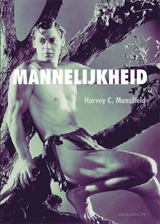
Equality is terrifically inefficient. There are always too many cooks in our house, too many decisions made by argumentMansfield Manliness and committee. “Who’s going to the store? How much milk do we need? What do you mean you can’t find it? Do you have time to pick up the kids today? No? Do you think your work is more important than my work?”

It’s infinitely easier to divide up the tasks, setting up little fiefdoms of expertise. We’ve tried that too: one of us does all the carpentry, grocery shopping, and vacuuming, while the other takes care of cars, computers, cooking, and the laundry. But it means that we’re helpless in each other’s world: confronted by a TV remote or a child’s underwear drawer, we panic. I understand, now, all those widowers who can’t boil water and divorcées who don’t know how to pay the bills. It’s the price of a system that, when it works properly, makes perfect sense.

Roles are easier to cope with and to understand—which might explain something else about household equality, its invisibility. On the one hand, there’s nothing more attractive to many women than a man wearing a baby in a carrier. On the other, in the great debate over women’s work, men who do contribute to the household work simply don’t exist. In real life, I look around me at the parents I know—not just the artistic types but the software engineer, the house painter, the plumber—and everywhere I see men working part-time and caring for their children. [Part-time work is much more common in the Netherlands than in the US, and is especially popular with working mothers.] Yet anyone who steps out of the statistical pattern is not only undervalued but unseen.

Giving men and women back their fiefdoms, and their recognition, is the goal of “Manliness,” by the philosopher Harvey C. Mansfield. He believes that roles work better than improvisation, and that they are actually better at allowing people to be themselves. He doesn’t want to spend his life negotiating and explaining his motives. He feels that men are naturally confident, aggressive leaders who should not be asked to do “women’s work” or be judged by female standards.

Mansfield, 75, teaches at Harvard University, where, in the relatively progressive American academic climate, he stands out for his conservative politics. A writer for neoconservative journals and nurturer of that movement, he advocates for a strong presidency and has written books on Machiavelli and Edmund Burke. In “Manliness,” he has clearly tackled a hot issue: the book has been widely reviewed, he has been much in demand as a speaker, and now, two years after its American publication, the book is being published in Dutch translation.

It’s a sign of the need for a book like this that it’s been so popular, because there’s not much enlightenment to be gained from actually reading it. Between the brief definition of manliness at the beginning (aloofness, authority, “confidence in the face of risk”) and its defense at the end, there lies, like the gray meat of an unappetizing sandwich, a long discussion of philosophy and literature that is vague, tedious, self-contradictory and occasionally wrong.

Mansfield begins his defense of manliness by rejecting all evidence from psychology, anthropology, and even biology. The social sciences, he contends, are inaccurate, inadequate and full of hidden agendas. This is typical of American neoconservatives, who on the whole have no patience for empirical evidence. Ultimately, science as a whole fails his test: intellectual rigor is not manly.

Instead he seeks in his own field, classical philosophy, and comes up with Aristotle’s thymos, which Mansfield describes as “spiritedness,” “bestial courage,” and bravery in self-defense. Thymos is “what gives us personal pride and makes us individuals.” It is George W. Bush’s “stay the course” and a street kid’s demand for respect. As Mansfield uses it, it might also be translated as “underbelly,” and he admits that it is not appealing unless tempered. He says over and over again that male aggression is both a positive and a negative force. But like a junkie, he is willing to ignore the side effects for the rush.

Set against this manliness, and poised to undermine it, is feminism, which Mansfield sees as enemy number one. He has been teaching at Harvard since 1962, long enough to be battered by several waves of the feminist movement; I bet it hasn’t been easy. But that’s no excuse for his drastic misrepresentation of the feminist project. The goal of feminism, he claims, is women’s independence from men and children. Most of what’s been written about women’s desire to combine work and family he disregards, noting only that American women have suggested government-subsidized day care. But he can’t imagine why women would “put their trust in impersonal bureaucracy rather than in a man who loves them.”

His worst-case scenario is “the gender-neutral society,” by which he means, as I understand it, a flattened existence of people who compete with each other at work and suffer at home, because the men can’t express their true nature and no one wants to do the housework. Because bravery and risk-taking are frowned on, he fears, no one will achieve anymore. We are, he says, “downsizing greatness to ‘individuality.’” Instead, he feels we should permit men, and the occasional woman (Margaret Thatcher), to be manly, while requiring women to be responsible for manliness. They should appreciate it, allow themselves to be protected by it, and gently correct its excesses.

In fact, feminists don’t seek a sexless society; they seek a society in which they are not automatically, because of their sex, allowed less opportunity. There should, you’d think, be plenty of room for heroism here. But certainly the equality model, with its improvisations, compromises, and arguments over the groceries, is complex. Mansfield can’t see a pattern in it, and so it looks gray and dreary to him.

Of the examples of manliness that he gives, few come from this contested ground that is real life. They mostly come from the world of art: Achilles, Tarzan, Gary Cooper in “High Noon.” They’re often quite appealing examples; the problem is, they’re imaginary. They are our fantasies about what men should be, not our knowledge of what they are. They’re also selectively, deceptively chosen: you’ll find Rudyard Kipling’s poetry of empire, but not his grief-stricken rejection of the warrior ideal after his son was killed in France in 1915. Nowhere mentioned in “Manliness” but everywhere between its lines is the Iraq War, a real-life example of what happens when Mansfield’s manly qualities—excessive risk-taking, disregard for the evidence, inability to tell fact from fiction—are put into practice.

If there’s a strong strain of nostalgia in “Manliness,” it’s not entirely because modern society has tamed all the heroic males. It’s also because the greatest heroes have always lived in the past, which is another way of saying, in our fantasies. Far older than feminism is the ubi sunt lament, in which the poet cries, “Where are the young warriors who went before us? Where is the great lord, the giver of gifts? Alas, he is gone, I am alone.”

And so Mansfield cries, “Where is John Wayne? Where is Teddy Roosevelt, the great hunter? Where is my boss at Harvard, Larry Summers? Alas, he had to resign because he said women couldn’t do math. Will his like ever be seen again?” It isn’t that Mansfield himself wants to do great deeds; he longs to sit at the feet of a man greater than himself. He wants to serve the alpha male.

In his discussion of feminism, Mansfield accuses Simone de Beauvoir of nihilism—Nietzsche’s “will to nothingness”—because she prefers the unknown future to the options that women already have. It’s true that we don’t know what’s there, but that doesn’t mean we can’t, in Mansfield’s terms, take the risk and embrace it. Equality may be a messy nuisance, but it still feels more real and more forward-looking to me than any of Mansfield’s elegant fictions. If it means sometimes running out of milk, then, heroically, I’m willing to pay that price.

Trouw, January 19, 2008. Harvey C. Mansfield, Manliness (New Haven: Yale University Press, 2006); Mannelijkheid (Amsterdam: Meulenhoff, 2008).

“The Dangerous Book for Boys” meets “The Daring Book for Girls”

Our 5-year-old daughter is angry. At bedtime we’ve been reading out loud to her from Donald Duck comics. But now her 8-year-old brother is jeering, “Girls can’t be in the Junior Woodchucks. The Junior Woodchucks are for boys. The Chickadees are for girls.” That seems fair: one scouting group for boys, one for girls. But since the stories in the comics are never about the Chickadees, all my daughter can do is withdraw in tears of frustration. She doesn’t belong to the club that counts.

I don’t give feminist lectures at home; I don’t want to ruin anyone’s fun. But it doesn’t take a girl to see that the stories aren’t fairly divided. “Where are the women superheroes?” my son once asked me, in all innocence. “Good question,” I said.

What can you do if you’re a girl? You can try to participate in boys’ things until your nose bumps up against the ways in which you’re being left out; or you can form your own club and discover that you’re still not being taken seriously. You can read Donald Duck and be left out once a week, or you can subscribe to Katrien, the girls’ edition, which only comes out six times a year. The editor-in-chief of Donald Duck said recently in an interview, “Comic books are a guy thing.” It’s true. But is it chicken or egg?

Lately both men and women seem to have grasped, with the grim determination of a mountain climber clinging to a rope, the theory that boys and girls are biologically different. Finally we don’t have to pretend to be what we’re not, is the relieved, or irritated, logic. Not only does innate difference often seem to work as an explanation, it’s genuinely restful. If you’re a woman, you can give up changing bicycle tires; if you’re a father, you can quit keeping track of your children’s socks. If you are a girl, you can plead for My Little Pony toys and actually get them; if you are a boy, you can let your dolls, or rather, “action figures” ax murder each other. Why waste time doing something badly when your entire sex seems to be doing something else well? Efficiency is a virtue these days, and no one wants their children to fail.

One thing is clear: difference is a gold mine for marketers. My brother and I had a toy castle as kids; but when I went to look for one for my own children, I couldn’t find a unisex fortress. Now castles come in boy editions (gray and fierce) and girl editions (pink and lacy). The knights rule one realm, the princess another, and the toy company chalks up two more sales.

There’s a notion of encouraging boys that plays into this, too. It’s sometimes argued that boys don’t fit into the too-feminine, over-organized world we’ve made for our children, that they need to see positive images of themselves, that they no longer have anything of their own. Fine, that makes sense.

But if women are sometimes a bit more wary of gender divisions than men are, it’s because so often the game turns out to be slightly rigged against the girls. For example: The New York Times recently reported on a large management study that showed that however women behave in the workplace, it’s never right. Qualifications for the ideal manager vary from culture to culture. In Britain, “inspiring others” is seen as most important, while in Norway, it’s “the ability to delegate.” But there was one consistent result: whatever was valued most, women were perceived to be less good at it. And if women were good at a particular task, then that task was given less value.

All this doesn’t mean there’s anything wrong with the UK and US best-seller The Dangerous Book for Boys, now published in Dutch as Het Jongensboek. Written in a lively, accessible style for boys around age 12, and meant to promote independence and adventurousness, it’s full of all kinds of worthwhile information. It instructs preadolescents in how to tie knots, write messages in code, provide first aid, do coin tricks, skip rocks, and talk to girls. It teaches them how identify trees and insects. It includes sections on fossils, astronomy, history, and the rules for football and marbles. It contains accounts of famous battles in history (a subject I found morbidly riveting as a child) and instructions for how to shoot, skin, clean, and cook a rabbit. It reminds me of the illustrated science books my brother and I had as children, like the geology one, with its cutaway illustrations of hillsides and volcanoes, showing the geological layers, and its lurid, enticing color photographs of gems.

The “dangerous” in the title is a bit misleading. Aside from chapters like “The History of Artillery,” much of the information is scholarly and canonical: here are poems every boy should read, Latin phrases, the parts of a sentence (grammar, very good) and rules for spelling. With its art nouveau cover, recalling children’s fantasy books circa 1900, the book is as old-fashioned inside as it is out. One’s wariness is eased by the realization that, aside from the rabbits (which have been left out of the Dutch edition), this is pretty square stuff. My husband, who was curious enough to buy the American edition, was disappointed. “Where is pop culture?” he muttered. “Where are the Beatles?”

With its focus on history and literature, the Dangerous Book lends itself to a harmless form of national pride. The book’s adapter, journalist Hans Hoekstra, has taken the opportunity to fill the Jongensboek with Dutch and Flemish history: great navigators and inventors, the Eighty Years’ War, 120 years of bicycling in the Lowlands. Shakespeare has been replaced with Multatuli, Hastings with Heiligerlee. Bits of the new Canon of Dutch History are explained: who or what were Hebban olla vogala, Eise Eisinga, Annie M.G. Schmidt?

It’s fascinating, all of it—exactly the kinds of things I’d want my kids to know. The whole book radiates a warm, safe feeling of solidity, learning, and old-fashioned values. There’s just one burning question: what’s left over for the girls? Do we get half? If we ask for half, will everyone hate us for spoiling the boys’ fun?

At least two equivalent books for girls have appeared this year, one in the UK, the other in the US. The British version, The Great Big Glorious Book for Girls, has stirred up controversy for presenting an old-fashioned view of girlhood. It contains instructions on knitting, baking, braiding hair and how to do a stage faint, and explains, “Boys are physical, girls are emotional.” Instead, Dutch publisher De Harmonie has chosen to translate the American version, The Daring Book for Girls, by Andrea J. Buchanan and Miriam Peskowitz.

To my pleasant surprise, the Daring Book is just as useful as the Dangerous. It gives the rules of basketball and darts. It tells how to care for your softball glove, read a tide chart, paddle a canoe, fill a toolbox, and make a willow whistle. It gives math tricks, prints the Periodic Table of the Elements, lists women inventors and political leaders. It has some traditional girl stuff, too, like jumping rope and pressing flowers. (“Hey, pressing flowers, good idea,” said my husband, who studied biology.) And it has useful tips for the future, like how to negotiate your babysitting salary. While it still has a pop culture gap, it’s actually better and more useful than the boys’ book, at least if you’re an urbanite with no place to use a homemade go-cart.

In fact, almost any of these activities could have been in the boys’ book, or vice versa. And that, it seems to me, is the real trouble: to put a fence around one set of things and mark it “boys,” and another fence around “girls,” may be restful for a while—and it will certainly sell more books. But there’s always going to be someone who doesn’t fit. And then what? “It’s not bad to say girls and boys are different,” my husband commented. “But if you glorify or wallow in those differences, you’re in danger of undoing 40 years of feminist work.”

It’s the old-fashioned, blissfully nostalgic look and feel of this particular book for boys that makes it so popular, I suspect—but not necessarily because its readers are anti-girl. It also recalls an era when it was clear what we were supposed to learn, when grammar, history, literature, and science all mattered, when children were supposed to fill their heads with facts and dates, when they were encouraged to know what words meant and how to spell them.

It’s interesting that the quest for a literary and historical canon, the hunger for a Dutch national identity, and the longing to find immutable differences between men and women have all come into play at the same time. The pendulum has swung from “everyone is the same” to “groups are different.” We’re more interested right now in the rule than the individual, in solid footing than experiment.

Speaking for myself, I love traditional knowledge. I don’t want it to be thrown out. I think history is fascinating, even in the centuries when my sex doesn’t appear in it. I want to know about the voyages of Abel Tasman and the battle of Waterloo. I want a place of honor for Shakespeare, and I’m willing to accept a lesser role for women, if I must, in order to acknowledge his importance.

But must I? This is the less useful aspect of a canon, the way it has to exclude something (women, people of color, the Beatles) in order to be taken seriously, in order, in fact, to be a canon at all. Women and minorities water down the list. To include among the historical adventures a bold tale of escape from slavery would be immediately to open yourself up to charges of political correctness, i.e., lack of seriousness, no matter how thrilling the story actually was. At the same time, I suspect that the Daring Book is more appealing partly because it does show alternatives to that old-fashioned narrative of guns, heroes, and Latin phrases. (Not surprisingly, the girls’ book is somewhat less blindingly white than the boys’ one.) As important as general knowledge is, there are times when even men can be happier the edges than in the middle.

One thing I didn’t see in the girls’ book that I might have included is a section on archaeology. To be an archaeologist is an ambition of many preadolescent girls, along with the closely related professions of librarian and spy. These are fantasies, I think, about access to knowledge. Girls want to own the world of books. They’re drawn to secret information. They want to know what lies hidden beneath the soil. When girls can’t see themselves in the world of official knowledge, they search underground.

Still, I hope my daughter won’t have to look for her place in the world beneath the earth or in the dark. As my husband points out (so you don’t think I said it and call me a spoilsport), “Letting go of rigid gender roles has made the world a lot more confusing. But it also feels more like real life.”

Genghis and Jane

The writer of The Dangerous Book for Boys, Conn Iggulden (1971), is more conservative in interviews than in the book itself. The author of the Emperor series of historical novels about the life of Julius Caesar, and of a new series starring Genghis Khan, Iggulden comes down strongly on the “boys are different from girls” side of the debate. “You only have to push a boy on a swing to see how much enjoys the thrill of danger. It’s hard-wired.”

When an interviewer suggests that a boy might be drawn to a female role model such as Jane Goodall, he answers, “The simple fact is that boys are inspired by stories of men being courageous and self-sacrificing much more than Jane Goodall and her chimps.” Given the complexity of the gender debate, statements containing the words “hard-wired” or “the simple fact is” feel reactionary, no matter what the content. And yet Iggulden has also said that his favorite book as a child was The Secret Garden, and that it was his mother who gave him his interest in history.

His main concern, he says, is that kids are overprotected, and that we are producing “a generation of soft, pale, chubby boys afraid of their own shadow.” Once the culprit for “unmanly” men was overbearing mothers, now it’s computer games and the Internet—as if we can only escape the influence of the Internet by adopting old-fashioned, pre-broadband gender roles.

The authors of the US Daring Book for Girls seem determined, in interviews, not to get involved in the difference debate. But the authors of the British Great Big Glorious Book for Girls have said that they are happy to propogate traditional gender roles. Co-author Rosemary Davidson told the Times (UK), “While it is clearly [seen as] okay to endorse, or celebrate macho ideals – as Dangerous does – I do wonder whether girls should be genderless. Glorifying boyhood is good, but it is somehow wrong to know how to make a doll.” Statements like this led Lynne Truss, in a Times review, to comment that Glorious is “an incredibly perplexing book masquerading as a simple one.”

Trouw, November 24, 2007. Donald Duck comics are wildly popular in the Netherlands.