Saturday, March 14, I’ll be at the Leipzig Book Fair for a special reading marking Alice Sheldon’s 100th year, organized by my fab German publisher, Septime Verlag. More info at www.leipziger-buchmesse.de.
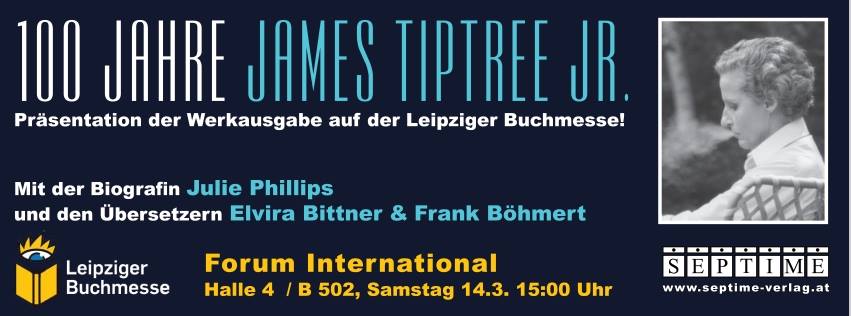

Saturday, March 14, I’ll be at the Leipzig Book Fair for a special reading marking Alice Sheldon’s 100th year, organized by my fab German publisher, Septime Verlag. More info at www.leipziger-buchmesse.de.
Because copy editors are independent-minded grammar nerds, and because I’ve been one, and because I haven’t seen this in English anywhere else, I put together what I could find about the copy editor at Charlie Hebdo, Mustapha Ourrad. He was 60 and had been at the paper since 1997. His friend Fabien Soyez says, “He was a leftist and worked for Charlie Hebdo because he believed in their ideal of freedom. He wasn’t the type to work for an employer who didn’t share his humanist values.”
Friends describe him as reserved, erudite, concerned, kind, and funny. Former colleague Christophe Baffier-Candès says he was “toujours pince-sans-rire, et adorable”—always tongue-in-cheek, and adorable.
As a copy editor he was patient and professional. Colleagues praise his “discernment and elegance in his work, his mastery and love of language.” He liked to talk about literature and loved to recite poetry from memory.
Another friend, Elsa Maudet, recalls, “He told me all about the Bateau-Lavoir and the artists who lived there, the banquet organized by Picasso. In the Place Marcel Aymé he stopped in front of the statue of The Man Who Walked Through Walls and retold the whole plot of the story. […] My mother said, ‘When you talked about him you always had stars in your eyes.’”
He had a “hard” childhood in Kabylia, a Berber region of Algeria, and came to France at age 20 in 1974. A hometown friend remembered him as a great reader and brilliant student whose nickname was “Mustapha Baudelaire.” He said of himself that he was not Algerian but Kabylian, not Muslim but a “Sufi atheist.”
He had another gig at a health magazine–the job that paid the bills, I imagine. He wasn’t usually at Charlie Hebdo on Wednesdays—he worked the paper’s Monday close—but was in the office to check a special issue.
He was separated from his wife and had two teenage children.
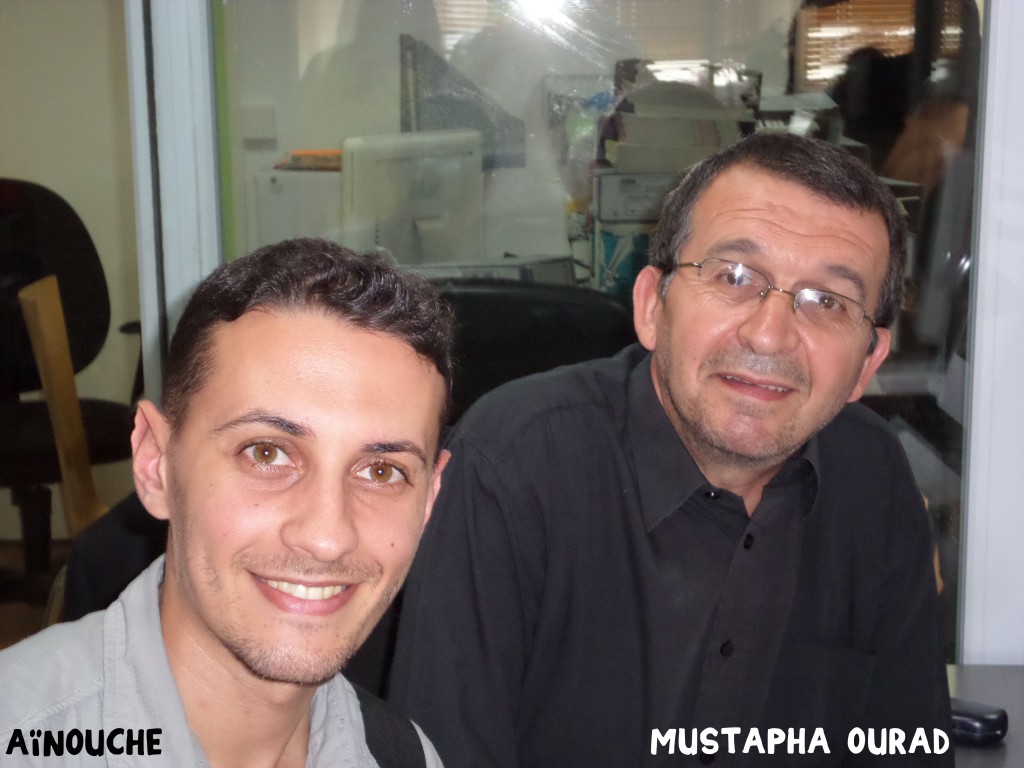
(Assembled from French, Algerian, and Italian websites and Elsa Maudet’s Twitter feed. The quote from Fabien Soyez is from the Dutch newspaper De Volkskrant, The translations are mine, with a little help from Google. The photo is from algerie-focus.com and shows Mustapha Ourrad, or Ourad, with Algerian cartoonist Ghilas Aïnouche at the office of Charlie Hebdo. Reposted from Facebook.)
I don’t usually write about politics, and I haven’t published much of anything lately because I’ve been working on my book. But I was struck by a gap between the American and European understanding of the Charlie Hebdo murders. I’m reposting this from my private Facebook page.
Is Charlie Hebdo racist?* Why has the European reaction been so strong? Here’s the thing: until the ‘60s, the church, Catholic and Protestant, had a strong repressive influence in Europe—much more so than in the US. The leftists of the May ’68 generation saw themselves as opposing church censorship. The European left still regards the right to question—and mock—religious authority as hard-fought and central to its identity.
At the same time the French in particular, and the Dutch, too, are deeply attached to the right to offend. As one writer put it, Charlie Hebdo represents “an anarchic populist form of obscenity that aims to cut down anything that would erect itself as venerable, sacred or powerful.” This tradition, as you might expect, regularly gives rise to conflict.
Islam especially divides the left. Either you say it’s racist to criticize Islam, so it should be given an exception, or you insist that Islam, like all other religions, is a legitimate target for satire. In general leftist Europeans, Muslim and non-Muslim, are much more involved than Americans with the whole question of free religious critique.
That freedom is one that has been directly threatened by fundamentalist violence ever since the fatwa on Salman Rushdie. In my view the Je Suis Charlie demonstrations are a response to the threat of violence and also a rejection of attempts by the right to hijack the debate and use free religious critique to justify intolerance.
So while Americans might see Charlie Hebdo as a weird, marginal, probably racist by-product of freedom of speech, Europeans are more likely to see Charlie Hebdo, whether they approve of it or not, as being at the heart of an embattled territory.
*I was using the wrong term here. “Prejudiced” or “Islamophobic” would have been better.
Thanks to the organizers of Elstercon and my German publisher, Septime Verlag in Vienna, for bringing me to Leipzig to talk about James Tiptree, Jr. with a great international group of writers and fans. The photos are by Stefan Kassler.
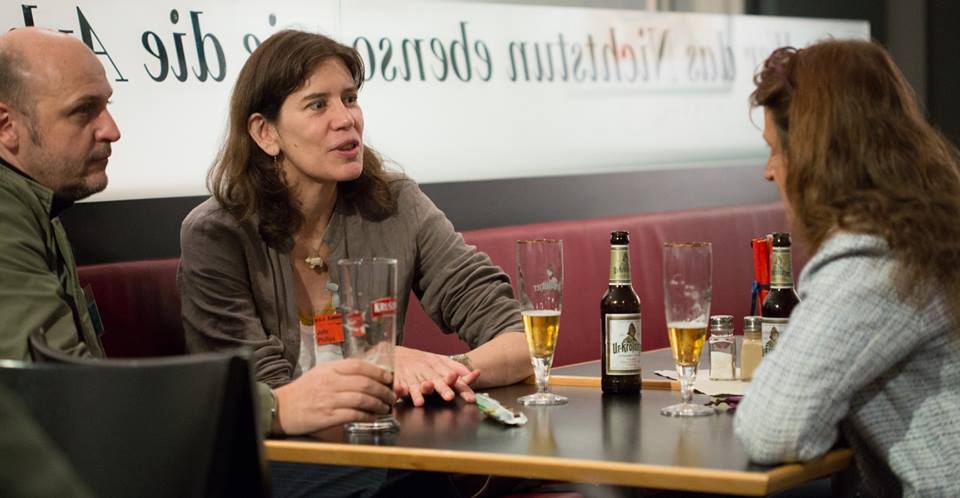
Me with Jürgen Schütz of Septime Verlag and Tiptree translator Margo Jane Warnken.
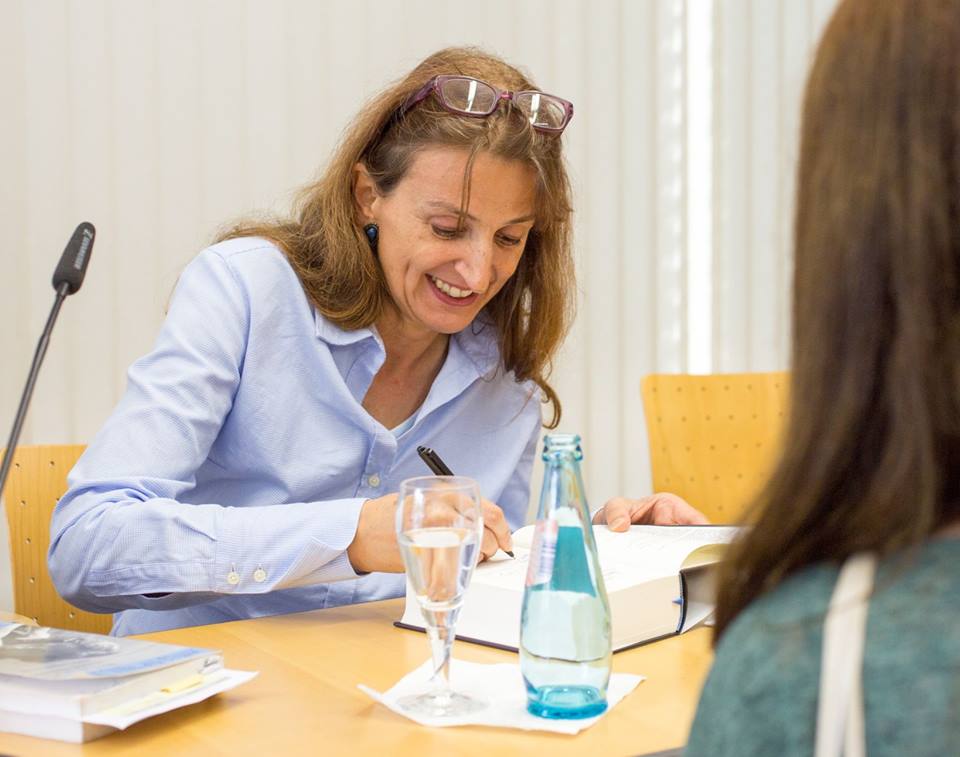
Margo was awarded the Kurd Laßwitzpreis 2014 for the year’s best science fiction translation.
The writer Ursula K. Le Guin was born October 21, 1929. I wrote about her work, career, and influence here. Last month the National Book Foundation awarded her its Medal for Distinguished Contribution to American Letters. It’s nice to see her getting formal recognition for her work, especially as her age makes itself felt in her daily life. Best wishes, Ursula!
September 19-21 I’ll be appearing in Leipzig at Elstercon 2014, talking about James Tiptree, Jr., with my award-winning German translator, Margo Jane Warnken. Appropriately enough, considering Tiptree’s work, the theme of the con is “Crime Scene: The Future.”

Saturday, Aug. 30, at 3 pm at the American Book Center in Amsterdam, I’ll be interviewing Corinne Duyvis, author of the widely praised YA fantasy Otherbound. She’s a young Amsterdam novelist and artist who writes and publishes in English. Her debut is a gripping read with an original approach to themes of disability, diversity, and the boundaries between self and other.
Corinne has a lot to say about disability in children’s books, about her autism, and more. Join us for a lively reading and discussion.
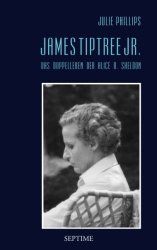
My German translator, Margo Jane Warnken, has won the Kurd Laßwitz Preis 2014 for best science fiction translation for James Tiptree Jr. – Das Doppelleben der Alice B. Sheldon (Septime Verlag, 2013). Congratulations, Margo, and many thanks to Septime Verlag, who are in the process of publishing the complete works of James Tiptree, Jr., in German translation.

Welcome to my new website! I’ve put together a selection of my recent articles and posted them here: on Toni Morrison and Michael Chabon, A.S. Byatt and Patti Smith, the art of the love letter, the Lost Continent of Mu, a Turkish writer in Amsterdam, and “Mrs. Dalloway” in the 21st century. Taken together they describe seven years of reading pleasure—with only an occasional twinge of pain.
For the past several years, I’ve been writing about books for the Amsterdam daily paper Trouw. All that work has appeared in Dutch, thanks to my translator (and partner) Jan van Houten. It’s been a very happy arrangement for me, and one that has allowed me to deepen my thoughts about belonging and difference, and about writing and reading across cultures. Now I’ve set up this site to make my reviews available in English as well.
I’m currently hard at work on my next book and doing very little reviewing, but I’ll try to post news and updates when I can.
I’m very grateful to Hans Scholten, who designed the site and put it online. Thanks also to David and Kristen Chick, who built my original Tiptree website and helped with this one; to the artist Isabella Werkhoven; who generously allowed me to use a detail from one of her paintings; and to Jan, who took the pictures of me.
My first job in New York was as an editorial assistant at Pantheon Books, where André Schiffrin was publisher. After he was fired, I was one of the employees who walked out in protest. He wore left-wing corduroy jackets and a benign look; he was too busy to take much notice of us assistants, but I felt he cared about us and wanted us to thrive. Over the years I learned to see how good he was, and how important to the conversation his books were. I’m proud to have worked for him, and I’m sorry he’s gone.
http://www.mhpbooks.com/hail-farewell-andre-schiffrin/
(Reposted from FB.)